
Freedom
- Home
- Freedom
Role in the Rampa Rebellion
A fearless revolutionary whose courage ignited the spirit of freedom and resistance.
Voice of Tribal Resistance
Alluri Sitarama Raju united tribal communities to stand against colonial injustice and defend their traditional rights.
Leader of the Rebellion
He led the Rampa Rebellion with courage and strategy, challenging British authority through organized resistance.
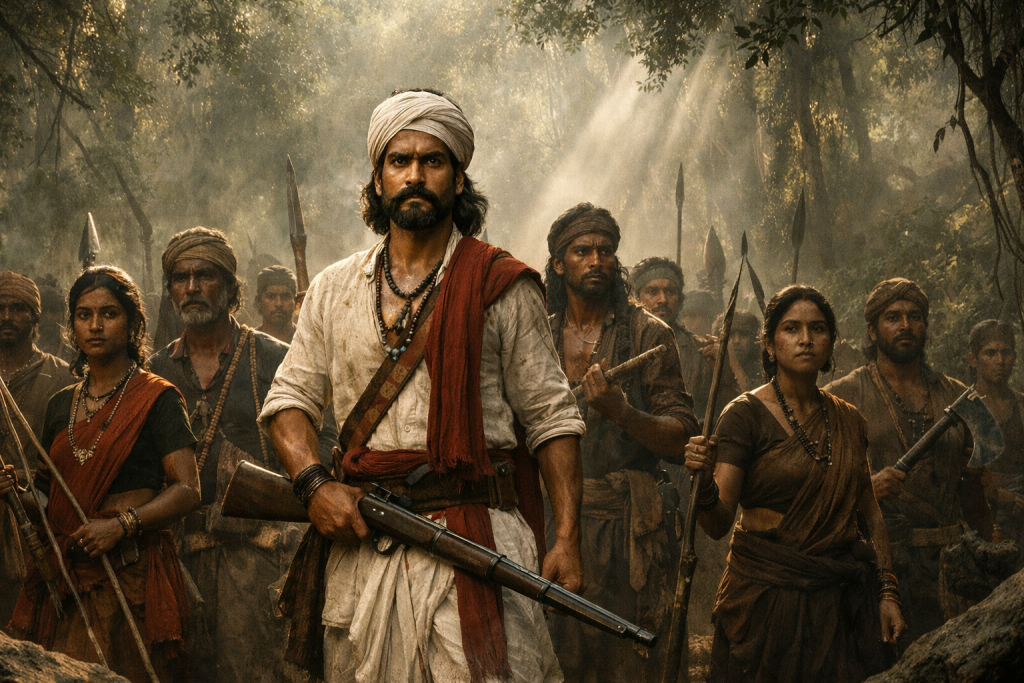
Guerrilla Warfare Tactics
Using deep knowledge of forest terrain, Raju employed swift guerrilla tactics to outmaneuver colonial forces. traditional rights.
Courage and Sacrifice
His fearless leadership and sacrifice made him a lasting symbol of resistance, inspiring generations to fight for justice.
Key battles and strategies
How Alluri Sitarama Raju led organized resistance through tactical brilliance and unwavering courage.
Guerrilla Warfare Tactics
Raju pioneered the use of guerrilla warfare in the forested regions of the Eastern Ghats. Instead of engaging in open combat, his forces carried out swift surprise attacks on British outposts, police stations, and supply routes. These hit-and-run tactics allowed them to weaken colonial control while minimizing direct confrontation. His deep understanding of the terrain gave him a strategic advantage, enabling his followers to disappear into the forests after each operation.
Targeting Colonial Authority
The rebellion focused on disrupting colonial administration rather than attacking civilians. British police stations, armories, and communication centers were targeted to seize weapons and weaken the colonial presence. This strategic approach demonstrated Raju’s emphasis on resistance with purpose rather than indiscriminate violence.
Mobilizing Tribal Unity
One of Raju’s greatest strengths was his ability to unite diverse tribal communities under a shared cause. Through trust, leadership, and shared cultural identity, he built a disciplined force committed to resisting oppression. His leadership transformed local grievances into a coordinated movement that challenged colonial authority across vast regions.
Psychological and Moral Resistance
Beyond physical combat, Raju’s movement relied on psychological strength. His courage and spiritual conviction inspired confidence among followers and fear among colonial officials. By embodying moral authority and fearlessness, he turned resistance into a symbol of dignity and self-determination.
Legacy of Strategic Resistance
Although the rebellion was eventually suppressed, the strategies employed by Alluri Sitarama Raju left a lasting impact on India’s freedom struggle. His methods influenced later movements and demonstrated how determined leadership, local support, and strategic thinking could challenge even the most powerful empires.
Alliances and leadership qualities
Uniting communities through vision, courage, and shared purpose
Alluri Sitarama Raju’s strength as a leader lay not only in his courage but in his exceptional ability to unite people across diverse communities. He forged strong alliances among tribal groups of the Eastern Ghats, bringing together communities that had long been divided by geography, language, and social barriers. Through trust, empathy, and shared purpose, he transformed scattered groups into a unified force committed to resistance and self-determination.
Compassionate
Deeply cared for the welfare of tribal people.
Visionary Leader
United tribal communities with a clear purpose.
Strategic Thinker
Used intelligent guerrilla tactics against stronger forces.
Brave and Fearless
Stood boldly against colonial rule and Example.
Disciplined
Guided by strong moral values stronger forces.
Selfless Patriot
Dedicated his life to freedom and justice.